
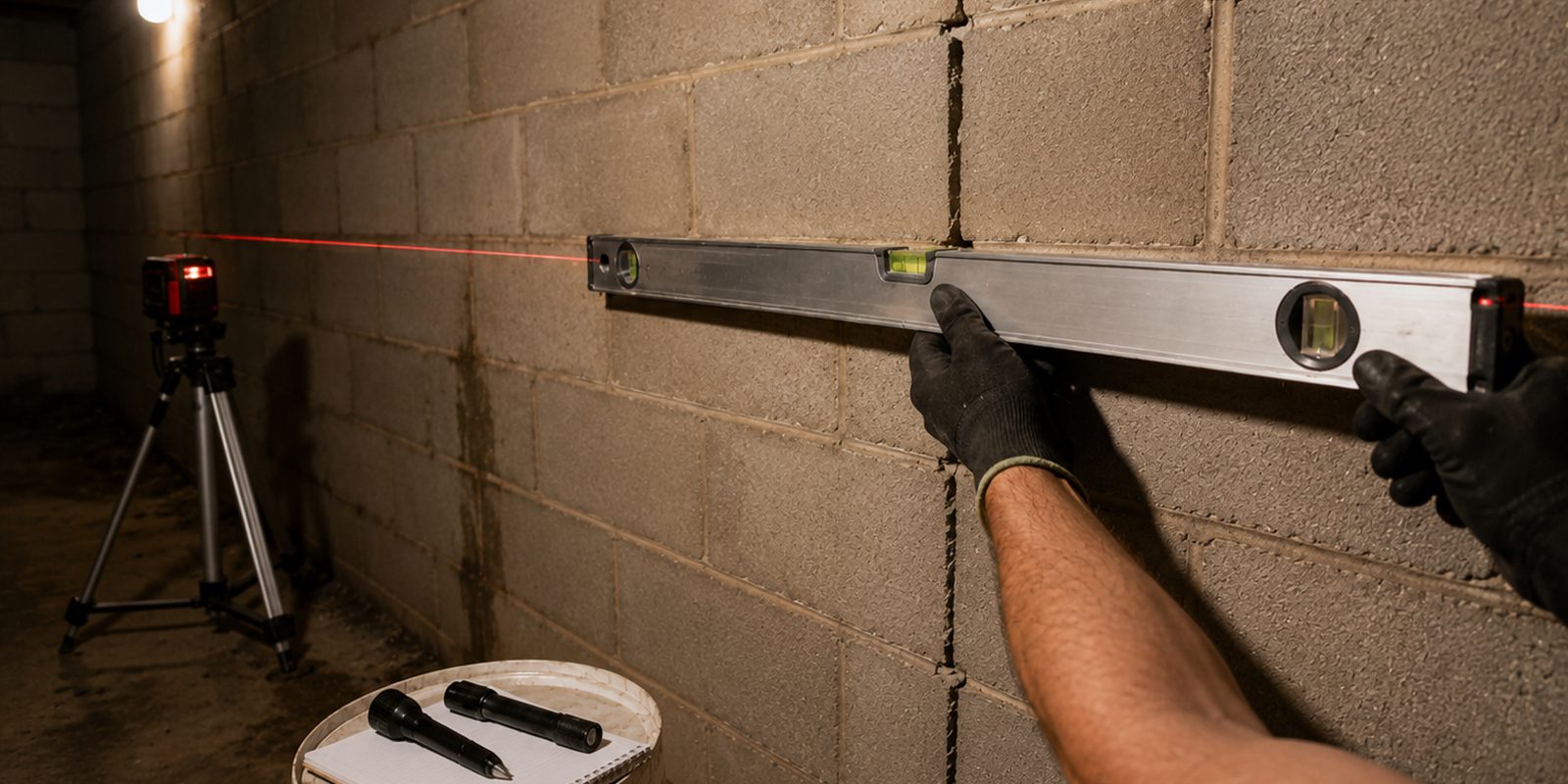
A foundation inspection answers one question before you spend any money: is this structural, or is it something a house does?
That distinction matters more in Birmingham than most places, because our clay soil produces a great deal of movement that looks alarming and turns out to be seasonal. It also produces genuine structural failure that looks minor from inside the house. Guessing between the two is expensive in both directions.
When an Inspection Is Worth Doing
Before you buy. A general home inspector will flag a crack and recommend a specialist, which is exactly the right call but leaves you without a number. If you are under contract, a structural opinion tells you whether to negotiate, walk, or stop worrying.
Before you sell. Knowing what a buyer’s inspector is going to find puts you in a far better position than being surprised by it during due diligence.
When something has changed. Cracks that are getting longer or wider, a door that has started sticking this year, a floor that has begun to feel unlevel — change is more meaningful than the existence of a crack.
After drought or heavy rain. Long dry spells followed by a wet spring are when Birmingham clay does most of its moving, and when problems tend to declare themselves.
What an Inspection Involves
Walking the outside first, looking at grade, drainage, downspout discharge and any stair-step cracking in the masonry. A surprising share of foundation problems in this area are drainage problems that have been running for years.
Then inside, checking floors for slope, doors and windows for racking, and interior finishes for the pattern of cracking that indicates movement rather than curing.
Then underneath, where there is a crawl space. Piers, girders, joists, moisture levels and standing water tell you more than anything visible from the living room.
The output should be a plain description of what is happening, whether it is active, and what the options are, including doing nothing.
Reading a Crack
Not all cracks mean the same thing, and the direction tells you most of it.
Fine vertical cracks in a poured wall are frequently shrinkage from the concrete curing, and are often not structural at all. Diagonal cracks running from the corners of openings usually indicate differential settlement. Horizontal cracks in a block wall are the ones to take seriously, because they generally mean the wall is being pushed inward by soil pressure rather than dropping.
Width is a rough guide rather than a rule. What matters more is whether the crack is moving, which is why a monitored crack over a few months can be worth more than one measurement.
An Honest Word About Free Inspections
Most foundation companies, including the ones in Birmingham, offer a free inspection because it is a sales visit. That is not sinister — it is how the trade works — but you should know that the person assessing your house also sells the repair.
Two things protect you. Get a second opinion on any recommendation over a few thousand dollars. And ask specifically what happens if you do nothing for a year, because a contractor who cannot answer that question calmly is telling you something.