
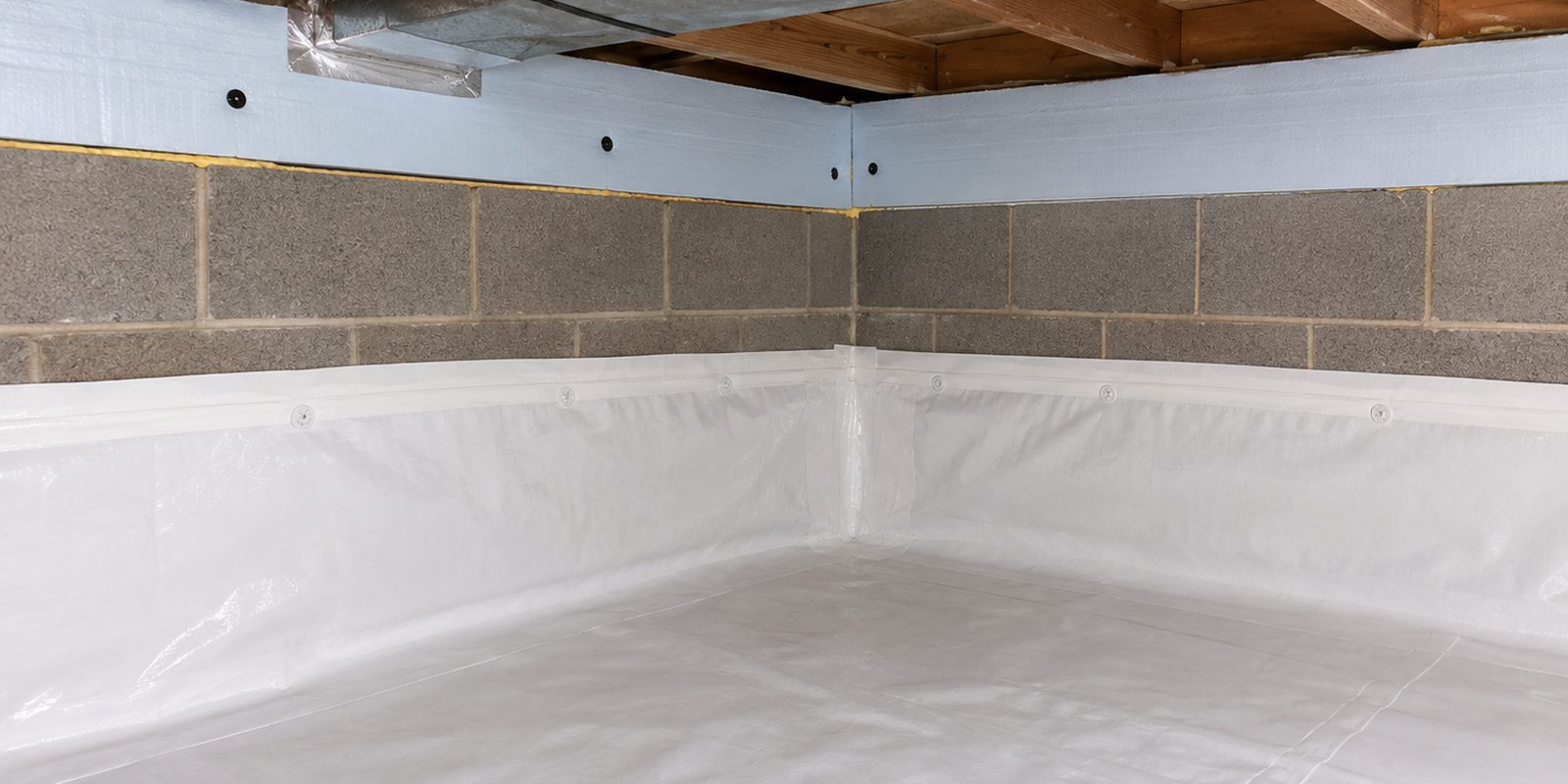
Encapsulation seals a crawl space off from the ground and the outside air, turning it from a damp, vented cavity into a dry, controlled space that behaves like part of the house. In central Alabama it is one of the few improvements that pays back in comfort, air quality and structural condition at the same time.
Why Vented Crawl Spaces Fail in Alabama
Building codes required crawl space vents for decades on the theory that outside air would dry the space out. In a humid climate it does the opposite.
Birmingham summers routinely sit above seventy percent relative humidity. That warm, wet air enters the vents and meets surfaces under the house that are considerably cooler, and the moisture condenses out onto joists, ducts and insulation. You are effectively pumping water into the crawl space every summer day.
Meanwhile bare earth on the crawl space floor gives off moisture continuously. An exposed dirt floor can release many gallons of water vapor a day into the space above it.
What That Moisture Does
Wood absorbs it. Above roughly twenty percent moisture content, structural timber becomes hospitable to fungi, and the joists, subfloor and girders begin to soften and lose strength. Sagging, springy floors upstairs frequently start as a moisture problem underneath rather than a framing defect.
Fiberglass batt insulation stapled between joists gets damp, loses most of its R-value, gets heavy and eventually falls out. That is the insulation you can see hanging down in half the crawl spaces in Jefferson County.
Air moves upward. The stack effect pulls a substantial share of the air you breathe on the ground floor up out of the crawl space, and with it whatever is growing down there. Musty smells in the living room usually originate below it.
Metal ductwork sweats and corrodes, and the HVAC works harder in a humid environment.
What Encapsulation Involves
A heavy reinforced polyethylene liner across the floor and up the foundation walls, sealed at the seams and mechanically fastened and sealed at the perimeter. Thickness matters — thin sheeting tears the first time anyone crawls across it.
Sealing the vents, and sealing the rim joist, which is often the largest single air leak in the house.
Managing the water that is already there before covering it up. Standing water needs a drainage solution and usually a sump; encapsulating over a wet floor traps the problem rather than solving it.
Controlling the remaining humidity, normally with a dedicated crawl space dehumidifier that drains to daylight or a pump. A sealed space without dehumidification can still reach problematic humidity.
Insulating the foundation walls rather than the floor joists, since the space is now inside the building envelope.
What Changes Afterward
Floors feel warmer in winter because you are no longer standing above a ventilated cavity. Summer humidity upstairs typically drops. The musty smell goes. Wood moisture content falls back into a safe range, which stops further decay — although it does not reverse damage already done, and rotten joists still need replacing.
Being Straight About Cost and Scope
Encapsulation is not cheap, and the price varies with square footage, how much water management is needed first, and whether damaged framing has to be repaired before the liner goes down. A quote that has not accounted for existing water or existing rot is a quote that will change once work starts.
If your crawl space is dry, already has an intact vapor barrier and shows no elevated wood moisture, you may not need it. That answer is worth hearing before you spend.