
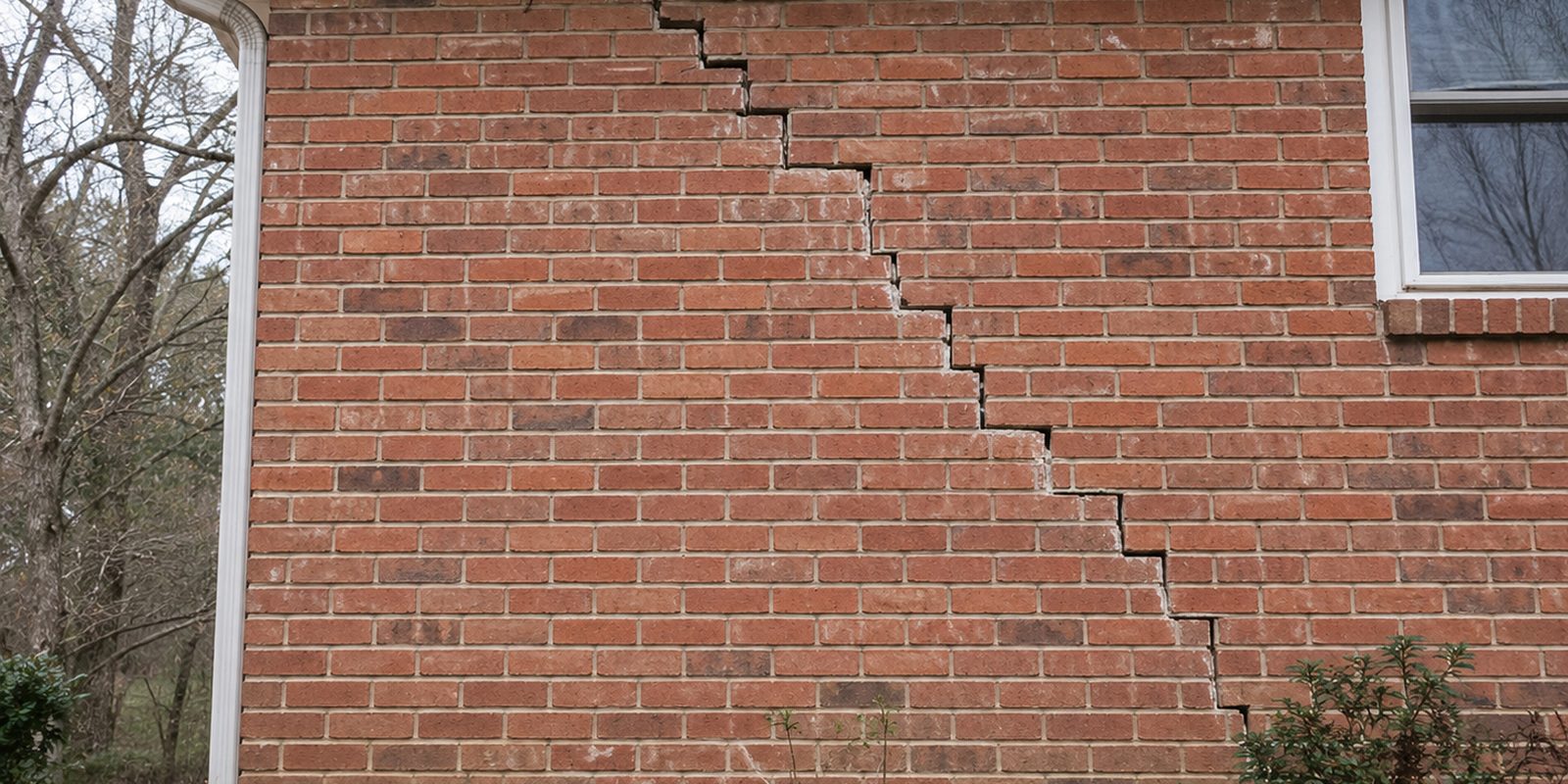
Not every crack in a foundation needs repairing. A good proportion of what worries Birmingham homeowners is concrete doing what concrete does as it cures, and sealing it is a cosmetic and moisture decision rather than a structural one. The useful work is telling the two apart.
Cracks That Usually Do Not Need Structural Work
Fine vertical cracks in a poured concrete wall, often within a few feet of a corner or an opening, are commonly shrinkage cracks from curing. They typically appear in the first year or two and then stop. If they are narrower than the edge of a coin, are not offset, and have not changed, they are usually not a structural matter.
Hairline cracking in a slab surface is often the same story.
They can still leak, and water coming through a wall crack into a basement or crawl space is worth sealing regardless of whether the crack is structural.
Cracks That Do Need Attention
Diagonal cracks from the corners of windows and doors, especially if wider at one end. That taper indicates one side has dropped.
Horizontal cracks in block walls, which indicate lateral pressure rather than settlement and are addressed with anchors or carbon fiber, not with filler.
Any crack with offset, where one side sits proud of the other, meaning the two sides have moved relative to each other in more than one plane.
Cracks that are actively changing. A crack you can watch grow over a season is telling you something a static crack is not.
The Repair Methods
Epoxy injection bonds the two faces of a poured concrete crack back together and restores structural continuity. It is rigid, and it is the right choice where the crack is not expected to move again. It is not appropriate where movement is ongoing, because the concrete will simply crack again alongside the repair.
Polyurethane injection is flexible and is used primarily to stop water. It expands into the crack and tolerates a degree of future movement, which makes it the usual choice for leaking cracks where some seasonal movement is expected.
Hydraulic cement and surface patching have their place for cosmetic tidying but do not stop water under pressure and do not restore structure.
Routing and sealing block wall joints is generally a water measure rather than a structural one.
Sequence Matters
Filling a crack that is caused by ongoing settlement is treating the symptom. If the cause is still active, the sensible order is to stabilize the movement first, let the house settle into its new position, and seal afterward. Any contractor proposing injection on a wall that is visibly still moving should be asked why.